Recycling and Sustainability for Landscapers Camden
 Landscapers Camden is committed to greener outdoor work, with a focus on an eco-friendly waste disposal area and a sustainable rubbish area that helps reduce landfill use while supporting cleaner streets, gardens, and shared spaces across the borough. Our approach combines careful sorting, responsible removal, and practical reuse, so landscaping waste is managed with sustainability in mind from start to finish.
Camden’s mix of homes, courtyards, terraces, commercial frontages, and communal gardens means landscaping projects often generate varied waste streams. These can include soil, turf, branches, wood offcuts, plant cuttings, old compost, broken paving, and packaging from new materials. As a landscaper in Camden, we separate these materials where possible, helping to direct recyclable content to the right destination and keep reusable resources in circulation. We also support local borough practices that encourage careful waste separation, making it easier to divert materials away from general disposal.
Our recycling target is to divert at least 85% of suitable green and construction-related waste from landfill or incineration, with a long-term goal of reaching 90% through better sorting, reuse, and supplier coordination. This includes composting organic matter, recycling clean timber and metals, and identifying materials that can be recovered rather than discarded. For many Camden projects, the smallest improvements in sorting make a big difference to the overall environmental footprint.
 We also work with local transfer stations and recycling facilities that can process mixed green waste, inert spoil, and selected hard landscaping materials. These sites are important for responsible disposal because they help separate reusable inputs from general waste and reduce the distance waste must travel. In and around Camden, the emphasis is on using nearby facilities wherever practical, which supports a lower-carbon model and helps keep the entire process more efficient.
Where suitable, our crews sort materials into categories such as organic waste, clean timber, soil and aggregates, metals, and mixed rubbish. This makes it easier to handle landscape clearance in a way that reflects Camden’s broader environmental priorities. In boroughs with strong waste-separation expectations, that means paying attention to contamination, avoiding mixed loads where possible, and ensuring recyclable items are not lost inside general rubbish. We use this approach across garden maintenance, hedge cutting, site clearance, and soft landscaping jobs.
 Our sustainable rubbish area is designed to support separation before disposal, with a clear emphasis on material recovery and reduced environmental impact. By keeping reusable items apart from non-recyclable waste, we can better manage garden sacks, planters, stone fragments, and packaging. This also helps with recycling Camden landscapes more effectively, because it creates a practical workflow for crews working in tight urban settings where space is limited and access can be challenging.
We are equally focused on partnerships with charities and community organisations that can benefit from items removed during landscaping work. Suitable planters, surplus timber, garden furniture, and decorative materials may be redirected where they can be reused rather than discarded. Some organisations support community gardens, educational projects, or local improvement initiatives, and this gives useful materials a second life. These partnerships are an important part of how Landscapers Camden recycling services can support both waste reduction and social value.
In addition to recycling, we aim to reduce emissions through the use of low-carbon vans and more efficient route planning. Our fleet strategy prioritises cleaner vehicles where possible, alongside consolidated collections and fewer unnecessary journeys. That means less fuel use, lower emissions, and a more sustainable service overall. For customers seeking an environmentally responsible landscape waste removal option, this supports greener project delivery without compromising reliability.
We also look closely at the materials we bring into a project. Choosing recycled aggregates, responsibly sourced mulches, and durable planting materials can reduce future waste and support a circular approach to landscaping. When combined with sorting, reuse, and careful disposal, this creates a more complete sustainability strategy. In Camden, where urban green spaces are often compact and intensively used, these small choices can have a noticeable positive impact.
 Another important part of our Camden recycling and sustainability approach is understanding how local waste systems operate. Borough-led separation practices often encourage residents and businesses to keep food waste, dry recyclables, garden waste, and residual rubbish apart. We reflect that thinking in our own workflow, so green waste is not mixed unnecessarily with general debris. This improves recycling outcomes and reduces the chance of recoverable materials being downgraded.
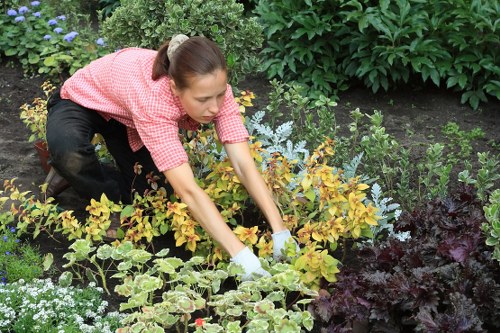
For landscaping tasks involving soil removal, old turf, pruning waste, and clearance from planting beds, we aim to keep organic material as clean as possible. Clean green waste can often be taken to facilities that compost or process it into useful products, helping return nutrients to the wider system. Where hard landscaping waste is involved, we also look for opportunities to recycle stone, metal fixings, and untreated wood, making the process more resource-efficient.
Our sustainability commitment is not just about disposal; it is about thoughtful project design, efficient operations, and responsible material choices. By combining a well-managed sustainable rubbish area with nearby transfer station use, charity partnerships, and lower-emission vehicles, we make it easier for Camden clients to choose a more eco-conscious landscaping service. That is especially important in a borough where environmental awareness and practical waste reduction go hand in hand.
 Landscapers Camden continues to improve its recycling performance by reviewing sorting methods, raising diversion rates, and building stronger links with local reuse and recovery networks. We are committed to keeping landscaping waste out of landfill wherever possible and to supporting greener streets, gardens, and communal spaces throughout Camden. Through consistent recycling, low-carbon transport, and careful waste separation, we aim to deliver landscaping work that is both effective and environmentally responsible.

